Tag: Review

  • The Lost City of Z

    The Lost City of Z

    A century ago, famed British explorer Percy Fawcett led an expedition into the Amazon looking for a mythical lost city. The group disappeared without a trace. In the years that followed, dozens-or-maybe-hundreds of people made their way to Brazil to search for the lost explorers. Most would return without answers. Some wouldn’t return at all.

    The mystery endures today. The book’s author, David Grann, found himself going down the Fawcett rabbit hole and trekked into the jungle himself. The Lost City of Z tells his story and recounts what is known about Fawcett’s doomed venture.

    I picked this up on a whim. I don’t read much non-fiction. After a decade as a journalist, I prefer to spend my leisure time reading fantasy. Not swords and dragons and maidens. I want fictionsloppy, trashy, dime-store, paperback fiction. I want high stakes, high adventure, high drama.

    Holy cow, the jungle delivers. It’s hard to tell on a map, but that large green smudge in South America is a merciless killing machine that will chew you up and spit out your bones. I think I understood this, deep down in some instinctual lizard portion of my brain. The Lost City of Z makes you feel it. It’s like a horror story. Those lucky few who make it out of the jungle emerge sick, starving, and infected with two-inch-long maggots under their skin. It’s amazing that anyone goes into the Amazon at all. I think I would turn to ash if I even looked at the jungle wrong.

    That being said, I’m glad I read this book. The author does a fantastic job writing about a mystery that, really, has no answer, and perhaps never will. He uncovers some information and reaches a conclusion about what happened. You can believe it or not. It’s a little underwhelming, but that’s history for you. Not everything comes to a happy or exciting end.

    What really stood out to me was the information about the lost city. Many people believe Fawcett was chasing a mirage through the jungle. The author tackles this idea, comparing his own findings with the early accounts by conquistadors that sparked Fawcett’s obsession with the place he called Z. I wouldn’t dream of spoiling those answers here, but they paint a fascinating picture of what may have once been hidden within the “green hell.”

  • Monsieur Spade

    Monsieur Spade

    Welcome. Come on in. Pull up a chair. You know my name? I hope so. It was written on the door. You don’t mind if I smoke, do ya? I know. It’s a bad habit. But me and bad habits? We’re like two peas in a pod.

    Enough of that. You didn’t waltz in here to talk vegetables. You want to know about Spade. Sam Spade. Private dick, like me. Solved a big case years back. The Maltese Falcon. Heard of it? I thought you might. Everyone knows about the black bird. Less folk know what happened next.

    See, Sam didn’t ride off into the sunset. Oh no. It may have taken 84 years, but he’s back. Older. Wearier. Tougher than a lifer in the hoosegow. As cynical as a faithless preacher. He goes by a new handle now. Monsieur Spade. It’s French. See, that dame who killed his partner? She beat the rap. Got released. Then she hired Sam to escort her daughter home to the south of France.

    Long way to go. Money must’ve been good. Or maybe there was something between them. Hard to say what motivates a man’s heart. Especially a man like Sam Spade.

    So Sam takes this girl to Bozouls, a little town in the south of France. The girl’s father ain’t around. Grandmother tells Sam her son ain’t got no children. So what’s a guy to do? He floats around with nowhere to go, like a fart in a crowded elevator. Drops the girl — Teresa, that was her name — at an orphanage. Falls for a rich widow. Gets married. Settles down. Stays outta trouble.

    But trouble has a way of finding us all, don’t it?

    Eight years later, the father comes back to town. Some say to swipe the girl’s trust fund. Great guy, right? Then bodies start to drop. Murder is in the air. Everyone is looking for this kid. No, not Teresa. A young boy from Algeria. Why do they want him? Well, all I’ve heard are stories. Some say he’s a child prodigy. Gifted. A real wiz with the numbers. A natural code breaker. The kind governments would kill for. Others? Well, others say the kid is some great prophet reincarnated. If you believe in that sort of thing. Doesn’t matter what we think. People have killed for far less.

    Sam finds himself in the middle of this. It all gets a bit confusing. Everyone thinks Sam knows about the kid. Or where to find him.The only kid Sam’s concerned with is Teresa. She’s coming of age. Quick with a lie, just like her mother. She’s hell on wheels, and living dangerously. Maybe that young soldier boy eyeing her is a ticket out of town. Or maybe he’s after the same score as everyone else. Sam? He just wants to mourn his wife. Look out for the kid. Folk just keep butting in.

    I see you nodding off. I get it. I do. I shrugged my way through this story, myself. I had to hear about it all by my lonesome. Couldn’t let my girl listen to it. You kidding me? This story would’ve lulled her away like Sleeping Beauty. And I ain’t no Prince Charming.

    Eventually, someone just rounds up everyone and throws ’em in a room. Makes them talk it all out. Real Agatha Christie-like. I say someone because they never say who she is. She says she’s got powerful friends. Who are we to argue? A whole lot gets said, without saying a whole lot, if you catch my drift.

    Everything ends and nothing really changes. ‘cept maybe Sam has a new inkling about his place in the world. A few more bodies in the mud, too, but people die every day. Them’s the breaks.

    That about sums up Monsieur Spade.

    What? Not a good enough yarn for you? Hey, I didn’t write it. What can I say? The story’s a century late. It follows maybe the greatest mystery story ever told. Nothing was gonna live up to that. Are you kidding? To even come close, it’d have to be…

    The stuff dreams are made of.

  • Sandman Mystery Theatre, Compendium Vol. 1

    Sandman Mystery Theatre, Compendium Vol. 1

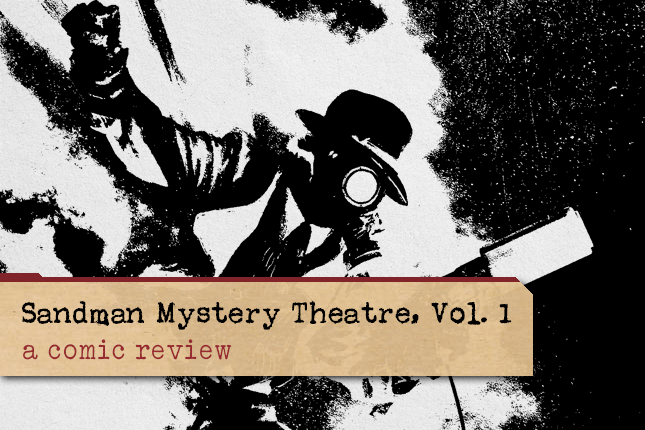
    Wesley Dodds is The Sandman—no, not that one—a 1930’s vigilante armed with a gas mask, a gas gun, and a pocketful of righteous indignation.

    Every night, Dodds falls asleep and dreams horrible nightmares about the monstrous criminals who stalk New York City. The only way to silence his nighttime thoughts is to venture out in the night and bring these foul demons to justice. Yes, we’re in the land of the pulps, ladies and gentlemen. Delicious pulp adventure goodness is where my heart lives rent free, and Sandman Mystery Theatre serves up a nice plate of it.

    This omnibus collects the first 36 issues of the comic and weighs about as much as a Heisman Trophy. If someone comes to rob your house while you are reading, throw this at them and you’ll be charged with murder.

    Dodds makes for an interesting character. The son of a wealthy industrialist, he has the Batman backstory minus the murder. His dad succumbed to a mysterious family illness and now Dodds is the public face of his father’s empire. Unlike Bruce Wayne, who rocks the playboy disguise, Dodds is a bit of a nebbish fuddy-duddy who mostly wobbles around and collects strange looks.

    His girlfriend is Dian Belmont, the daughter of a district attorney and a bit of a wild child who isn’t afraid to move out of step with the times. She’s there to fall in love with Dodds, figure out his deep dark secret, and throw tantrums when she learns the truth. Still, she rings true as a character, but, it feels a bit overshadowed by predictable beats and plotting.

    The fact that Dodds isn’t a super-powered crime fighter is part of what makes this fun. He’s just a shlub in a trench coat. Sometimes he royally screws up in the heat of the moment, which is a nice change from most comic book characters.

    Later, I found out that this is all laying the groundwork for the D.C. Universe and the first Justice League and I swear I groaned so loud I set off a car alarm. I’m just a simple man. I don’t have time for this nonsense. I just want to watch a guy in a fedora beat the hell out of some criminals. If he’s also drowning us in the roar of his blazing .45s, all the better.

    Thankfully, Sandman Mystery Theatre seems to understand this. There are a couple references to other properties sprinkled throughout but they aren’t so on the nose that it takes you out of the story.

    Each arc of the plot is laid out across four issues, each featuring a “monster of the week” criminal for Dodds to take down. Meanwhile, the story of Wesley and Dian and their changing circumstances plows forward like modern day serial television. It makes for some good reading, all in one sitting, but I read that it was hell for newcomers to the series back in the 1990s when it was coming out month-to-month.

    By the end of this huge book, I felt like the four-issue arc structure caused more problems than not. At times, it seemed like writers Steven T. Seagle and Matt Wagner were forced to cram all their ideas into a framework that was often too wide or too narrow for them to maneuver in.

    Still, if you’re in the market for a guy in a mask and a fedora hitting people—and I always am—then you could do a lot worse than Sandman Mystery Theatre. It’s a fun yarn to read through and you’ll totally tone your arms lugging this monster around with you.

  • The Good Asian

    The Good Asian

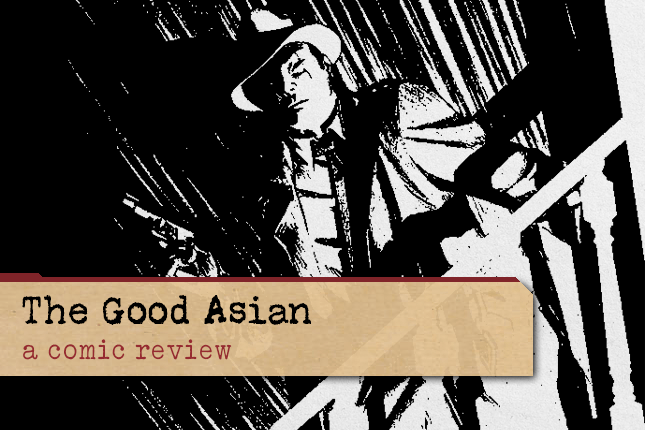
    Edison Hark is one of the first Chinese-American police detectives, working the mean streets of 1930’s Honolulu, when he gets an urgent request from his surrogate brother to come home. Hark was “adopted” by a rich, white family after his mother, who worked for them as a maid, passed away. Now history threatens to repeat itself: The family patriarch has fallen into a coma, and the family’s maid, another Chinese-American, has gone missing. The case is further complicated by the appearance of Hui Long, a mythical boogieman who begins killing his way through the Asian criminal underworld.

    As a man who stands in two worlds but lives in none, Hark is a fascinating character. The whites don’t trust him because he is Chinese, and the Chinese don’t trust him because “Who would give a badge to the Chinese?” as one woman tells him. Even the cops don’t trust Hark, instead using him as an undercover informant or to roust drug addicts from opium dens. He’s quiet, brooding, and self-loathing, made all the worse by living in a time when the U.S. Government has banned Chinese immigrants from entering the country.

    The glimpses behind the scenes of a little-discussed piece of history were fascinating and probably my favorite part of the whole story. Author Pornsak Pichetshote wisely includes a historical supplement at the end, which provides more context for the time and places where the story is set. For a closeted history buff like myself, it was pure gold.

    The mystery itself, however, I liked, but did not love.

    The story takes a few strange dog legs into another character’s point of view. Both times this happens, it unfolds without warning and left me wondering if some pages were missing. Transitions are a useful narrative tool.

    A bigger problem, though, is that the large cast of characters is hard to follow through the twists and turns of the plot. There’s quite a few names to juggle. This isn’t helped by artist Alexandre Tefenkgi’s simple and unadorned style, which makes a lot of characters—I really hate to say—look the same. It rather undercuts the drama when the story drops an important name or a character reveal and you are left asking, “Wait, who is that again?”

    Despite these hangups, I had a good time wandering the streets with Edison Hark. The Good Asian is a nice slice of comic book noir that’ll also teach you a thing or two along the way. What more could you ask for? There’s also a tease in the back of the book that the character will return. I guess I shouldn’t be surprised. The book picked up an Eisner Award for best limited series and there’s rumblings afoot that a movie or TV adaptation might be on the way.

    Count me in.

  • Blacksad

    Blacksad

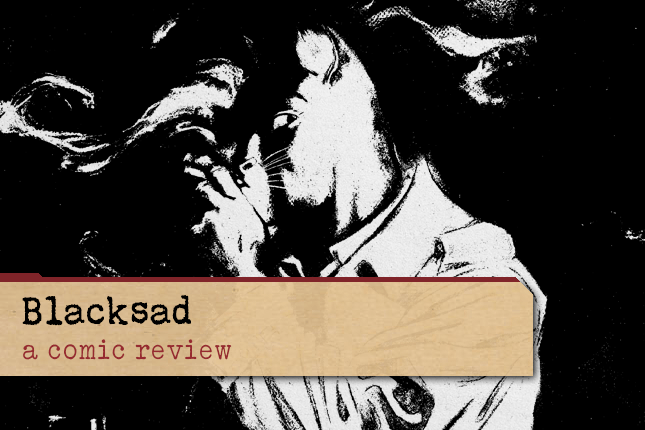
    John Blacksad is a trench coat-clad private investigator on the mean streets of 1950’s America. He’s also a six-foot-tall, anthropomorphized cat with a gun. So don’t rub his belly without asking.

    Blacksad, the graphic novel, includes the first three collected stories in this series: Somewhere within the Shadows, Arctic Nation, and Red Soul.

    Somewhere within the Shadows is easily my favorite of the bunch. It’s a no-nonsense detective yarn. Blacksad’s former flame, Natalia, a starlet of the silver screen, is found shot to death in her home.
    Our hero sets out looking for vengeance. He prowls through the seedy underbelly of Tinseltown, encountering knife-wielding monitor lizards, conniving frog businessmen, punch-drunk gorilla boxers, and corrupt canine cops along the way.

    Think Zootopia, but very R-rated.

    It’s all fairly standard noir stuff, but it’s delivered with grace and style. Juanjo Guarnido’s art is something to behold, a mix of lavish watercolors and expressive characters that come alive on the page in this richly evocative world. It’s no wonder the series has received a ton of prestigious awards.

    The remaining two stories, however, fell a bit short for me.

    In Arctic Nation, a young girl goes missing in a small neighborhood beset with racial tensions. The girl’s mother won’t go to the police, because the polar bear chief is a prominent member of a white supremacist movement. Rumor is that the girl may have been kidnapped by this group, or by the black power group that opposes them. But what would they stand to gain by abducting an 8-year-old? And can Blacksad find her before the streets erupt in a bloody race war?

    In Red Soul, a philanthropic group of scientists and creatives come under suspicion of being communists in disguise. One of their number is killed, but it appears the intended target was Otto Liebber, Blacksad’s one-time mentor and a barn owl with a questionable history. Blacksad sets out to find the killer while the group is set upon by callous FBI agents and a Joseph McCarthy-esque senator with an agenda.

    Both of these stories are fine, well-told little mysteries, but I felt like the larger social angles writer Juan Díaz Canales was exploring fell a bit flat. Especially in Red Soul, the Blacksad’s investigation almost seems like a side plot to a wider examination of the Red Scare and the lingering trauma of World War II.

    It also gets a little weird when they start name dropping folks from history, like Franklin Delano Roosevelt. So, wait, is he like a moose in this or something?

    Honestly, as much as I enjoyed Blacksad as a whole, I kept finding myself pulled out of the narrative by silly little questions like this. What do the characters eat? Like, is there a meat industry? There’s a rooster senator in one story, so chicken is probably off the menu. What about beef? Are cows sentient in this universe?

    These are dumb questions. But they kept bugging me. Why do some animals still have their tails, while others don’t? Blacksad doesn’t have a tail, but we see a wolf with one later. Why isn’t it consistent? Do the cats still use litter boxes? I don’t remember if we ever see a bathroom. Since Aquariums exist, do zoos as well? If so, what do they exhibit in them? Humans? That’d probably be too silly.

    I know, I know, I just need to respect Hodgson’s Law: “Just repeat to yourself it’s just a show, you should really just relax.” But it’s hard when you are enjoying such a fine glass of classic noir and then you have to stop for a moment to wonder if dogs still chase cars or attack the mailman.

    Anyway, if you can look past these quibbles, you’ll find a great take on the classic hardboiled P.I. genre. I can’t wait to read more.

  • Novocaine

    Novocaine

    Jack Quaid is Nate Caine, a man born with a rare genetic disorder that makes him unable to feel pain. Comes in handy during a fight, but it makes dinner awkward when you have to remember not to bite your tongue off. Every superpower has a weakness, I guess.

    Nate is the assistant manager at a San Diego bank. He falls head-over-heels in love with Sherry (Amber Midthunder), the perky new girl who looks past his social awkwardness and discovers in him a kindred spirit. Then armed gunmen kick in the door and take Sherry hostage. They gun down a few cops and make their getaway, damsel in tow, and Nate gives chase in an abandoned squad car, kicking off the plot.

    As premises go, it’s a fun one. Nate is lousy in a fight and worse with a gun, but has that ace up his sleeve. His enemies can kill him, but they can’t hurt him. This leads to a couple good laughs when his opponents realize what they are up against. Like when Nate sticks his hand in a boiling deep fryer to retrieve a pistol without hesitating. It makes for some great spectacle.

    But, unfortunately, there’s not much else worth your time here.

    Novocaine is a great idea for a movie, and therein lies the problem. It feels more like an idea than the exploration of one.

    We care about Nate, because he is played by Jack Quaid with his trademark charm and wide-eyed earnestness. But we never really worry about him, because the script is simple and takes no real risks. Regardless of whether he can feel pain, shouldn’t the accumulation of injuries start to slow Nate down? It never seems to be an issue. There’s one scene where he patches a bullet wound with some super glue. Then he just moves on.

    There are other things that undermine the drama. You would think a few police officers being shot dead in the line of duty would elicit a big response from law enforcement, but nope. Everyone is on vacation. I guess the movie takes place during Christmas? They make a few comments about it being the holidays and never mention it again. Die Hard, this ain’t.

    There are only two cops on Nate’s trail. Budget cuts, I guess. At first, they think he was the inside man who aided the robbers. This sounds like it is going to twist the story in a fun direction, but no. The situation gets cleared up one scene later with a phone call. Nothing to see here.

    The movie can’t seem to decide whether it wants to go all-in on the comedy or the action. I think this could have been a great film if it leaned harder to the left or the right. I’d love to see what someone like John Wick director Chad Stahelski would do with this material. Instead, the directors of Novocaine opt to be a jack (see what I did there) of all trades and master of none.

    It’s okay to be a movie with a gimmick, but you have to transcend it if you want people to care. Novocaine doesn’t even try.

  • Crimson Lake

    Crimson Lake

    Wrongly accused of a heinous crime he didn’t commit, ex-cop Ted Conkaffey is trying to lay low in the fringes of rural Australia. When he begins talking to his old service pistol, Ted suspects it is time to get out of the house. Enter Amanda Pharrell, a local private investigator in need of a partner. She’s also the town pariah after murdering her classmate as a teenager.

    An accused child rapist teaming up with a convicted killer? Sounds like a match made in heaven.

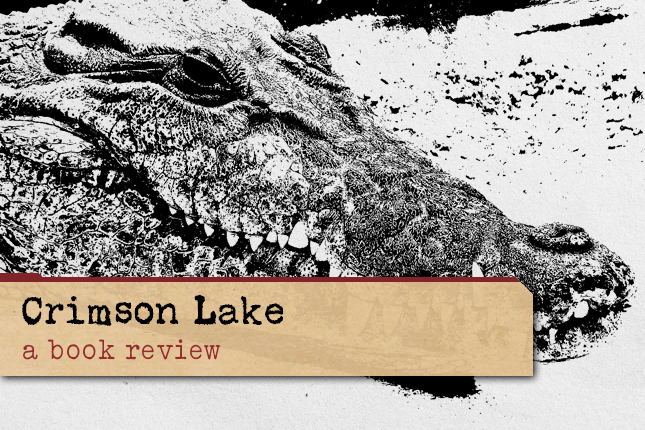
    Ted and Amanda are hired to investigate the death of a local author. The case appears cut and dry. A crocodile coughed up the man’s wedding ring. Could it be suicide by croc? Or something more nefarious? A note hidden in a cigar box sends them down a trail of secret liaisons, obsessive fans, vigilante teenagers, and cold-blooded killers.

    As they dig deeper into the case, author Candice Fox delves into Ted’s emotional turmoil. He’s a broken man, haunted by his time in prison, terrified of being recognized on the street. Since the case was dropped due to lack of evidence, Ted’s been found guilty in the court of public opinion. He’s heard so many different versions of what may have happened on that fateful day, his memories have started to warp into a twisted “What If?” nightmare.

    It’s harrowing stuff, and the author captures it with a deft hand. It would have been easy for the story to descend into an all-out misery fest: Ted drinking his life away while dodging bricks thrown through his windows. But the little glimpses of his humanity — tending to wayward geese, poking holes in the case that put his new partner away, rebuilding his home and a sense of normality when rogue cops smash everything he owns — really make you root for the guy. It’s almost enough to stand alone as its own story, but Fox balances it and the core mystery like a seasoned pro.

    Really, my only complaint about the book is that the resolution to Ted and Amanda’s investigation is a bit jarring. It ends up making sense once the author lays it out, but it felt like a stretch for our characters to get there. But hey, even greats like Raymond Chandler couldn’t always tell you who-killed-who in his own books. No reason to let a little Sherlock Holmesian leap in logic ruin the fun.

  • Han Solo’s Revenge

    Han Solo’s Revenge

    The intergalactic smuggler with a heart of gold returns in the 1979 novel, “Han Solo’s Revenge.” Which of course begs the question, “What is he so mad about?”

    Well, after his latest get-rich-quick scheme sparks a minor uprising, Han and Chewie strike out for the Corporate Sector. It’s a few years before “A New Hope” and the pair need a quick score to keep the creditors at bay. Against his better judgement, Han signs on to haul some cargo without knowing what he’s transporting.

    It turns out to be slaves.

    Unwilling to traffic in sentient freight, Han turns on his employers and sets out to make them pay. Specifically, the ten thousand credits he was promised for the job.

    Um, Mr. Solo? I think you have to complete the job to be owed payment. But never mind.

    Instead, he begins working his way up the criminal hierarchy, demanding his money like a Star Wars riff on Richard Stark’s The Hunter. The story rips along as Han follows the trail to low level thugs, corpo goon squads, space pirates, squabbling clan leaders, shadowy poisoners, and the secret beating heart of the conspiracy.

    Along the way he picks up a couple fun partners, including a mismatched pair of droids, a skip tracer determined to repo the Millenium Falcon, and a spunky junior executive who wants to expose the conspiracy to get a boost up the corporate ladder.

    Author Brian Daley may not get the acclaim of Timothy Zahn, but his Han Solo novels are consistently fun and entertaining romps. He imbues his characters with enough wit and compassion to bring them alive on the page in a way you rarely see in commercial tie-in fiction. It’s a shame we only got three of these novels from Daley. In a better world, we’d have dozens.

    Oh well. Han Solo’s Revenge is great action adventure in the wider world of Star Wars. I loved this book. It’s good, pulpy fun.

  • Han Solo at Stars’ End

    Han Solo at Stars’ End

    It’s hard to think back to a time when Star Wars was just a single movie. Maybe because I hadn’t been born yet.

    Before the Disney streaming shows, the sequel trilogy, the prequel trilogy, Clone Wars crap, the roleplaying games, the video games, the board games, the Disney rides, and a metric mountain-load of toys, there was just one film; A simple story about a farm boy with a laser sword who blows up a space station with his friends.

    Then, in 1979, that world expanded. We got our first look at what would become the Star Wars Extended Universe before The Empire Strikes back hit theaters. It was in a little book called Han Solo at Star’s End.

    Han, years before he meets up with Luke and Obi-Wan, is cooling his heels in the Corporate Sector. Think of it like the Empire, but with more red tape and business suits. He runs afoul of the law for not having his car, I mean starship, registration renewed and books it to one of his underworld contacts. She agrees to give him new fake credentials in exchange for pulling a dangerous job: Breaking some folks out of their work contract on a corpo-controlled agriworld. Without any other options, Han takes the job, and adventure ensues.

    Unlike a lot of Star Wars material, Star’s End captures the pulp serial action-adventure vibe that runs through the original film. There’s no bold, operatic battle between good and evil here. Just a fun adventure that sees Han and Chewie shooting it out with company goons, dealing with traitors in their midst, and leading an escape from an impregnable space prison.

    My favorite stuff in Star Wars has always been the little hints about the criminal underworld hiding in the corners of the frame, so this was catnip for me. I had a great time reading this. Author Brian Daley captures Han Solo’s voice so effortlessly that you can just hear Harrison Ford speaking the lines in your head.

    When I reviewed the Han Solo books by A. C. Crispin, one of my biggest complaints was that the stories failed to offer any insights into how he became the character we know. Chips on the table: This book fails to hit that mark, too. But the story was so vibrantly told with breathless excitement and energy that I didn’t have time to stop and care. Han Solo at Star’s End is a solid, entertaining slice of sci-fi adventure that makes me wish that Daley had written dozens of these books instead of just three.

    Sometimes, you just want to read about a guy with a laser gun committing crimes with his shaggy dog friend.

  • Star Wars: Rebel Dawn

    Star Wars: Rebel Dawn

    Who would have thought the best book in the Han Solo trilogy would also have the least amount of Han Solo in it?

    I’m getting ahead of myself. “Rebel Dawn” opens with Han down to his last credits after losing his ship, the Bria, in the battle of Nar Shaddaa. Never one for subtlety, Han decides to wager it all and enters a Sabacc gambling tournament.

    Elsewhere, Bria Tharen — the namesake of Han’s lost ship — is now a commander in the Rebel Alliance. She wants to attack Ylesia, the slave colony Han rescued her from two books ago. Taking over the illegal spice mining operation would give the Alliance money and troops to use in their fight against the Empire.

    Opposing her is Teroenza, the fake priest who runs Ylesia. He’s still annoyed that Han and Bria escaped all those years ago and stole treasures from his prized collection. He’s hired Boba Fett to capture them. Also, as a side hustle, he’s plotting against Durga the Hutt, who bankrolls the drug operation, because who doesn’t want to be their own boss?

    But wait, there’s more. Durga is obsessed with finding out who poisoned his father. Readers of the last book will know it was Jabba the Hutt and his uncle, Jiliac, who were plotting with Teroenza to overthrow the rival Hutt clan. Durga’s fixation draws the attention of Black Sun, a rival criminal syndicate which would love to get a foothold in Hutt space. Jabba, meanwhile, is bristling under his uncle’s stewardship, and seeks a way to become the new head of his clan.

    Whew! As you can see, there’s a lot going on in this book. Where the last two novels kept the stakes low and the focus limited, “Rebel Dawn” is epic in scale, shifting between a variety of vivid characters as the story barrels toward “Star Wars Episode IV: A New Hope.” As the capper to a trilogy, it’s a doozy.

    What amazed me was how neatly the story beats all clicked into place. A. C. Crispin ends the book about one minute before Han meets Luke and Obi-Wan in the Mos Eisley Cantina. It never feels rushed or forced, but a natural progression of the story that just happens to end right before the movies begin. It’s deftly done and a credit to the author’s ability (for the opposite effect, just watch “Solo: A Star Wars Story,” which is about as subtle as a rocket propelled grenade).

    Best of all, we see the events that harden Han’s heart and turn him into the “mercenary” of the films. As George Carlin famously said, “Inside every cynic is a disappointed idealist.” Seeing how this plays out adds a great layer to an already great character. Even though we spend less time with him, we learn more, and that makes for a better read.

    Speaking of spending little time with someone: One final note. Han and Chewie visit Kashyyyk, where the Wookiee gets married, leaves, comes back, discovers he has a son, then leaves again. So, I guess Chewbacca is a deadbeat dad? Or his wife is just one understanding lady. “But,” I imagine him growling, “I owe the guy a life debt.”

    Yeah, nice try. That excuse never worked for me, either.